

When a storm comes through Ayrshire, the damage is not always obvious from the street. A few slipped slates, a gutter hanging off its brackets or a fence panel in next door’s garden are easy to spot. Water working its way into a wall, a cracked flashing around a chimney or a soaked loft insulation layer are not. Good storm damage repairs in Ayrshire are about two things: getting the property safe and watertight quickly, then putting it right properly so the next gale does not find the same weak spot.
This guide is for homeowners and landlords dealing with the aftermath of a storm. It covers what to do first, how to record the damage, temporary repairs, and how our property and commercial maintenance team can help you get back to normal.
First steps after a storm: safety before repairs
The Met Office’s advice on staying safe in a storm is clear: don’t go out to make repairs while the storm is still blowing, keep away from fallen power or phone lines, and don’t walk close to walls, buildings or trees that may have been weakened. Once the wind has dropped:
- Look from the ground. Walk round the outside and check the roof, chimney, gutters and walls from a safe distance. Do not climb onto a roof or up a ladder in wet or windy conditions.
- Check inside, top down. Start in the loft if it is safe to get into, looking for daylight through the roof, wet timbers or damp insulation, then check ceilings and walls on each floor for fresh stains.
- Deal with water and electrics. If water is coming through near light fittings or sockets, switch off the power to that circuit at the consumer unit if you can do so safely. For a power cut, call 105, the free national power cut line.
- Think about neighbours and tenants. Make sure anyone vulnerable is safe. If you are a tenant, report the damage to your landlord or letting agent straight away.
Record the damage before anything is fixed
Whatever is wrong, it is worth taking a few minutes to record it before any work starts. Insurers generally ask for this, and it helps your contractor too:
- Take photos and video of every area of damage, inside and out.
- Note the date and time you found it, and keep a record of anything you have done to stop it getting worse.
- Check your policy and contact your insurer as early as you can. Many have a claims or emergency helpline.
- Keep damaged items and materials until your insurer says you can dispose of them.
- Keep every receipt and invoice, including for temporary repairs.
Each policy is different, so check with your insurer what they need from you and whether they want to approve a quote before permanent repairs begin.
Temporary repairs: stopping the water getting in
After a storm, the priority is to make the building weathertight so the damage does not spread. A good temporary repair is quick, safe and reversible. Typical emergency work includes:
- Securing loose or missing slates and ridge tiles, or covering the area until a full repair can be made.
- Boarding up broken windows and doors so the property is secure.
- Re-fixing or temporarily supporting gutters and downpipes so rainwater is carried away from the walls.
- Making safe a damaged chimney, wall or fence that could fall.
- Protecting the interior: lifting wet carpets, moving furniture and helping wet ceilings and walls dry out.

Temporary repairs buy you time; they are not the fix. A tarpaulin or patched flashing left through a whole winter tends to fail at the worst moment, and water that gets into the structure in the meantime makes the final bill bigger. We offer emergency call-outs as part of our maintenance service, and we will tell you plainly what has been done as a stop-gap and what still needs a permanent repair.
Storm damage repairs in Ayrshire: putting it right properly
Once the building is safe and dry, the real work starts. Ayrshire’s coastal weather, with salt-laden wind and long wet spells, is hard on any patch that is not done well, so permanent repairs should match or improve on what was there before. Depending on the damage, that can mean:
- Roofs. Replacing slates and tiles to match, re-bedding or re-fixing ridges, and renewing lead flashings and valleys. Where a roof has reached the end of its life, re-roofing can make more sense than repeated patching. Our Scottish renovation project included a full re-roof alongside two extensions.
- Chimneys. Repointing, rebuilding or, where a stack is no longer needed, taking it down safely. Our period home renovation in Alloway involved removing a large chimney stack.
- Walls, render and roughcast. Repairing cracked or blown render, repointing stonework and finding where water has got into the wall.
- Windows, doors and fascias. Replacing broken glazing, damaged frames and fascias and soffits that have been lifted by the wind.
- Garden walls, fences and paving. Rebuilding collapsed walls and replacing damaged paths or steps. Our hard landscaping team can rebuild with materials that suit the exposure.
Some repairs are more than like-for-like. If storm damage leads to structural work, a rebuilt chimney or changes to the building, a building warrant from the council may be needed, and listed buildings and conservation areas have their own rules. We will tell you if that applies and handle the paperwork as part of the job.
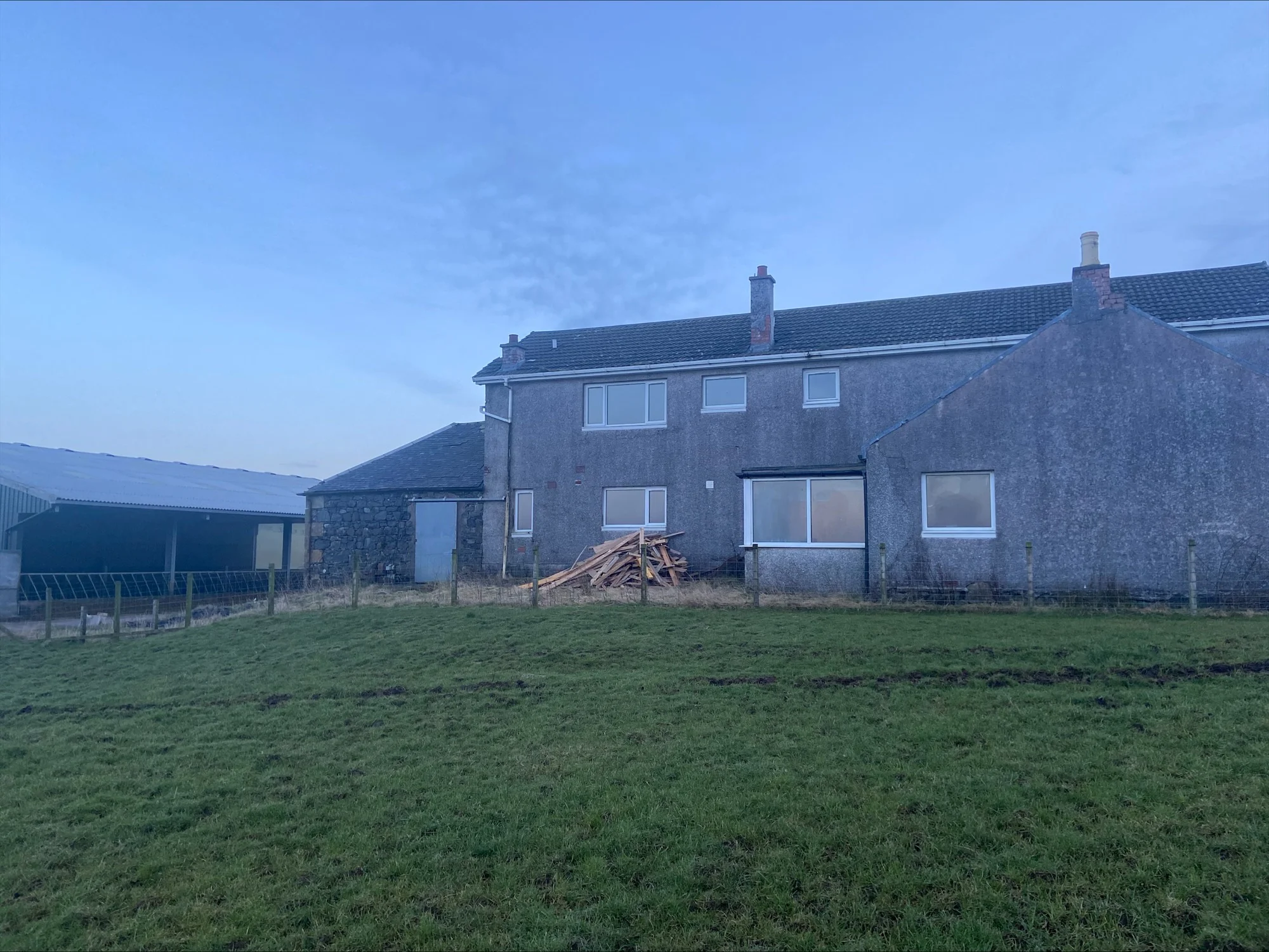
Older and rural properties often need more care. At Laigh Balsarroch Farm, a run-down farmhouse became a five-bedroom home with insulated walls, new windows and a mix of timber cladding and roughcast that is built to stand up to exposed Ayrshire weather.
Landlords and commercial property: keeping tenants safe and dry
For landlords and property managers, storm damage brings the added pressure of tenants who need a safe, dry home or business premises as quickly as possible. A single contractor who can make safe, repair and then maintain the building saves a lot of chasing. Our maintenance service covers inspections, repairs to roofs, gutters, windows and facades, landscaping upkeep, emergency call-outs and planned maintenance plans for residential and commercial property. If the repair turns into a bigger refurbishment, our construction team can take it on from planning to handover.
Prevention is always cheaper than repair. Our winter-proofing checklist for commercial property sets out what to inspect before the weather turns, and if an older building has taken one storm too many, our guide on whether to renovate or rebuild explains the questions to ask.
Frequently asked questions
Should I wait for my insurer before calling a builder?
Contact your insurer first if you can, but you should not leave a property open to the weather while you wait. Most insurers expect you to take reasonable steps to stop further damage. Record everything, keep receipts for any emergency work and get their approval before permanent repairs if your policy asks for it.
Can you give me a written quote for my insurance claim?
Yes. After inspecting the damage we can provide a written quote for the repairs, which you can pass to your insurer or loss adjuster.
Which areas do you cover?
We are based in Ayr and work across Ayrshire, including Prestwick, Alloway, Troon and Monkton. See our builder in Ayr page for more on the work we do locally.
Storm damage to your property? Talk to us
If a storm has damaged your home, rental property or commercial building in Ayrshire, get in touch and we will arrange to inspect it, make it safe and quote for a lasting repair. Call us on 07790 666673, email info@rhaconstruction.uk or send us a message.