

If you are planning a new home in Ayrshire, one of the first design decisions is now made for you: it will not have a gas or oil boiler. The New Build Heat Standard in Scotland means new homes warranted since April 2024 have to be heated by clean, zero direct emissions systems such as heat pumps or heat networks. For self-builders and landowners that is good news, as long as the heating is planned properly from the start.
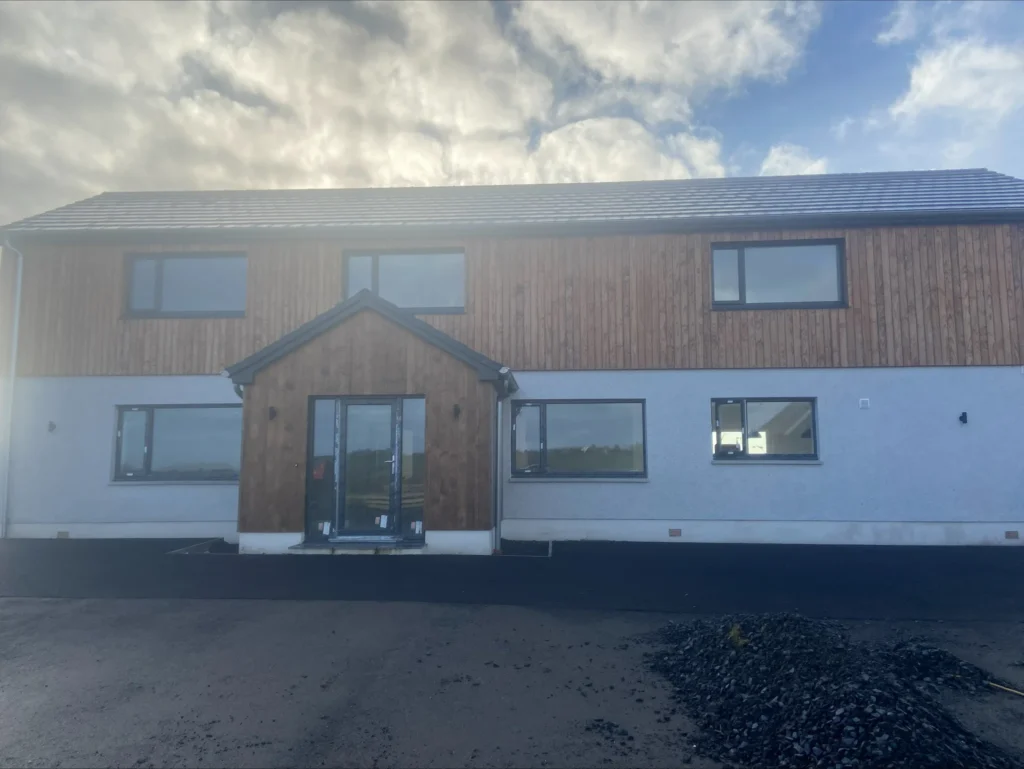
At RHA Construction we design and build custom and bespoke new homes across Ayr, Alloway, Prestwick, Troon and the wider county. Here is what the standard says, what it means for your build, and how to get a home that is warm, efficient and comfortable from day one.
What is the New Build Heat Standard in Scotland?
The New Build Heat Standard (often shortened to NBHS) is part of Scotland’s building regulations. It was introduced as standard 6.11 in the Scottish Building Standards and applies to building warrant applications made on or after 1 April 2024. Its aim is simple: new buildings should be fitted with clean heating from the outset, so they never need an expensive heating retrofit later.
In practice, that means a new home cannot use a “direct emissions heating system” for its space heating and hot water. Those are systems that burn fuel and release greenhouse gases where they are used, such as mains gas, oil and LPG boilers. The Scottish Government’s New Build Heat Standard factsheet sets out the detail.
A few points worth knowing:
- Timing matters. If your building warrant application went in before 1 April 2024, the standard does not apply while that warrant remains valid.
- Emergency heating. A direct emissions system can still be used as emergency heating where that can be justified.
- Wood-burning stoves are allowed again. After a review, the rules were changed from 1 January 2025 so that bioenergy systems, including wood-burning stoves, can be installed in new homes, and secondary heating is permitted. Gas and oil boilers still cannot be the main heating.
- Conversions are treated differently. When a building is converted, for example a steading or barn turned into a house, the standard only applies in certain circumstances. We check this early on any conversion project.
Which heating systems meet the standard?
Zero direct emissions heating means the system produces no greenhouse gas emissions at the point of use. For most new homes in Ayrshire, the realistic options are:
- Air source heat pumps. The most common choice for individual homes. An outdoor unit draws heat from the air, even in cold weather, and supplies heating and hot water.
- Ground source heat pumps. Collect heat from pipes buried in the ground or in boreholes. They suit larger rural plots where there is space for the ground loop.
- Heat networks. Where a district or communal network is available, a new home can connect to it rather than having its own heat source.
- Direct electric heating. Panel heaters, electric boilers or modern storage heaters. Simple to install, but running costs need careful thought.
The right answer depends on your plot, the size and layout of the house, how you live and your budget. That is a conversation we have with every client at design stage, alongside your architect or our in-house designers.
Design the house around the heating, not the other way round
Heat pumps work best at lower water temperatures than a traditional boiler. That makes the building itself part of the heating system. When we plan a new build, we think about the heating at the same time as the walls, roof and windows:
- Fabric first. Good insulation, careful detailing and airtight construction keep heat in, so a smaller, cheaper heat pump can do the job.
- Underfloor heating or larger radiators. Both suit lower flow temperatures. Underfloor heating works especially well in open-plan kitchens and living spaces.
- Space for the kit. A heat pump needs an outdoor unit with good airflow and a hot water cylinder indoors. Planning their position early avoids noise near bedrooms and lost storage.
- Coastal conditions. On exposed sites near Troon, Prestwick or the Ayr coast, we consider wind, salt air and sheltered positions for outdoor units.
These decisions sit alongside the rest of the design and the building warrant drawings. If you are new to the process, our plain-English guide to building warrants in South Ayrshire explains how the approval stage works.
Smart controls make clean heating easier to live with
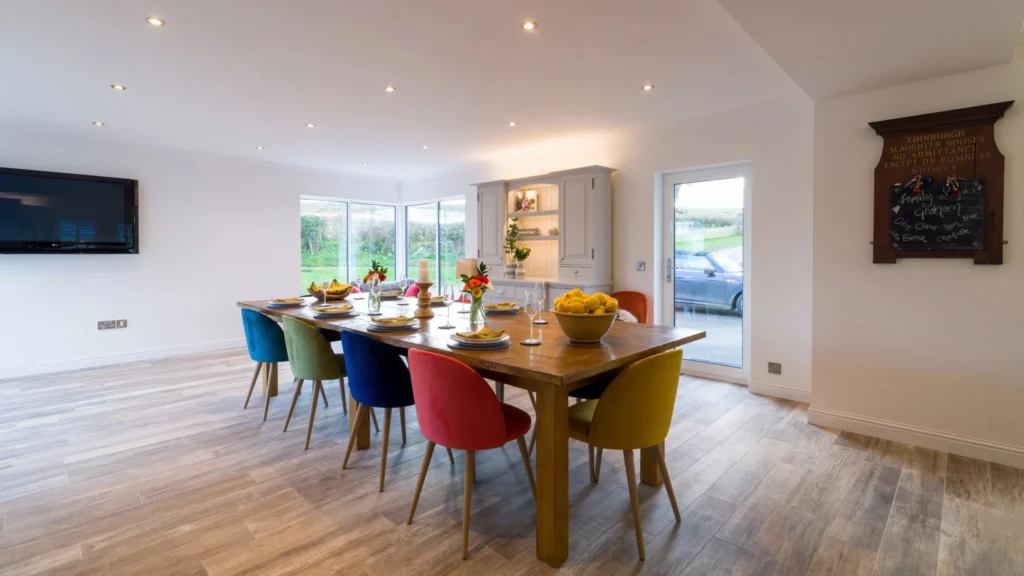
A heat pump runs differently from a boiler. It is usually most efficient running steadily at a lower temperature rather than blasting heat for an hour in the morning. Good controls make that effortless. Through our smart home automation service we can link heating, hot water, blinds and ventilation into one system you control from a wall panel or your phone, with room-by-room zoning so you only heat the spaces you use.
It is much easier and tidier to plan the wiring and sensors before the walls are plastered. We covered the basics in our article on smart heating control for Ayrshire homes.
What it means for your Ayrshire build budget
Every project is different, so we never quote a figure without seeing the plot and the plans. What we can say is that building to the standard from scratch is far simpler than retrofitting an existing home. There is no gas connection to arrange, the heating and fabric can be designed together, and you avoid paying to replace a fossil fuel boiler in a few years’ time.
The biggest cost drivers are usually the type of heat pump, whether you choose underfloor heating throughout, the level of insulation and airtightness, and how much smart control you want. Weighing these up early is one of the advantages of a design-and-build route. With one dedicated project manager overseeing design, trades and suppliers, the heating is treated as part of the whole house rather than an afterthought.
New Build Heat Standard: common questions
Does the New Build Heat Standard apply to extensions?
The standard is aimed at new buildings, with separate rules for conversions. Extensions and alterations are handled differently under the building regulations, so we confirm exactly what applies to your project before design work goes too far. See our extensions service for more on how we plan these projects.
Can I still have a wood-burning stove in a new build?
Yes. Since 1 January 2025, wood-burning and other bioenergy stoves can be installed in new homes in Scotland. Your main heating still needs to be a zero direct emissions system, such as a heat pump.
My building warrant was applied for before April 2024. Am I affected?
Not while that warrant is valid. The standard applies to warrant applications made on or after 1 April 2024. If your warrant lapses or the design changes significantly, it is worth checking your position with building standards.
Planning a new home in Ayrshire? Let’s talk
Whether you have a rural plot near Alloway, a coastal site near Troon or a town-centre gap site in Ayr, we can help you design a new home that meets the New Build Heat Standard and is a pleasure to live in. Take a look at our Laigh Balsarroch Farm and West Kilbride projects to see our work, or read more about us as a builder in Ayr.
Call 07790 666673, email info@rhaconstruction.uk or use the button below to book a no-obligation consultation about your new build.