

For most businesses, the hardest part of a refurbishment is not choosing the finishes. It is working out how to keep trading while the builders are in. A shop that closes for six weeks loses customers to the competition, an office that cannot find desk space loses productivity, and a bar or café that misses the run-up to Christmas can lose a large share of its year. Good commercial refurbishment in Ayr starts with that problem, not with the drawings. This guide sets out how to plan a fit-out or refurbishment so your business stays open, your staff and customers stay safe, and the work still finishes on time.
At RHA Construction we handle residential and commercial construction from planning through to handover, alongside our joinery and commercial fit-out work and our property and commercial maintenance service.
Start with how your business actually runs
Before anyone talks about layouts or materials, we need to understand your working week. The questions that shape the whole programme are simple ones:
- When are you busiest? Days, hours and seasons. A hospitality business and an accountancy office have very different quiet periods.
- What has to keep working? Tills, kitchens, server cupboards, toilets, stock rooms and the main entrance usually top the list.
- Who is in the building? Staff, customers, visitors, other tenants, and anyone with access needs.
- What are your fixed dates? Lease events, a reopening, a product launch or the Christmas trading period.
With those answers, the project can be built around your business rather than the other way round. Sometimes that means splitting the work into phases. Sometimes it means a short, intensive closure is cheaper overall than months of disruption. Either way, it is a decision you should make with the full picture in front of you.
Phasing a commercial refurbishment so you can keep trading
Phasing means dividing the building into zones and refurbishing them one at a time while the rest stays in use. It takes more planning, but it is the most common way to keep a business open. A typical approach looks like this:
- Enabling works first. Services that the whole building depends on, such as new electrical distribution or drainage connections, are planned so that any shutdowns happen out of hours.
- Back-of-house before front-of-house. Stores, staff areas and offices are often done first, so the customer-facing space is only disrupted for the shortest time.
- Sealed work zones. Each active zone is closed off with dust screens and its own access, so customers never walk through a site.
- Noisy and dusty work out of hours. Strip-out, cutting and drilling can be scheduled for early mornings, evenings or closed days, by agreement with you and any neighbours.
- A clean handover for each zone. Each area is finished, cleaned and checked before your team moves back in and the next zone begins.
Safety, compliance and the paperwork that comes first
Refurbishing a building that people are still using brings extra responsibilities, and several of them fall on the business, not just the contractor. It pays to get them sorted before the programme is fixed.
- Building warrant. In Scotland, many alterations to commercial premises, including structural changes, new layouts that affect escape routes, and changes to drainage or ventilation, need a building warrant before work starts. Our plain-English guide to building warrants in South Ayrshire explains how the process works.
- Your duties as a commercial client. Under the Construction (Design and Management) Regulations 2015, a business having building work done has its own client duties, and larger projects must be notified to the Health and Safety Executive. HSE sets these out in its guidance for commercial clients.
- Asbestos. Older buildings can contain asbestos, and a refurbishment and demolition survey of the affected areas is needed before work that could disturb the fabric. HSE explains the types of survey in its page on arranging an asbestos survey.
- Fire safety. Under the Fire (Scotland) Act 2005, your fire safety risk assessment should be reviewed before significant changes. During works, escape routes, fire doors and alarms must stay working in the areas you are still using.
None of this needs to delay a project if it is planned early. Leaving it until the week before work starts is what causes hold-ups.
Keeping customers, staff and neighbours on side
A refurbishment is visible, and how it is managed says a lot about your business. Small things make a big difference:
- Clear, tidy hoardings or screens with signs to your entrance and a short note on what is changing.
- Deliveries and skip collections booked outside your busy hours, with materials kept off pavements and car parks.
- A weekly look-ahead for your staff, so nobody is surprised by noise, a closed corridor or a power shutdown.
- Early contact with neighbouring businesses and landlords, particularly in shared buildings and town-centre terraces.
This is where having one point of contact matters. Every RHA client has a dedicated project manager, so you have one person who knows the programme, answers your questions and keeps the trades coordinated.
Design and fit-out: getting the finish right
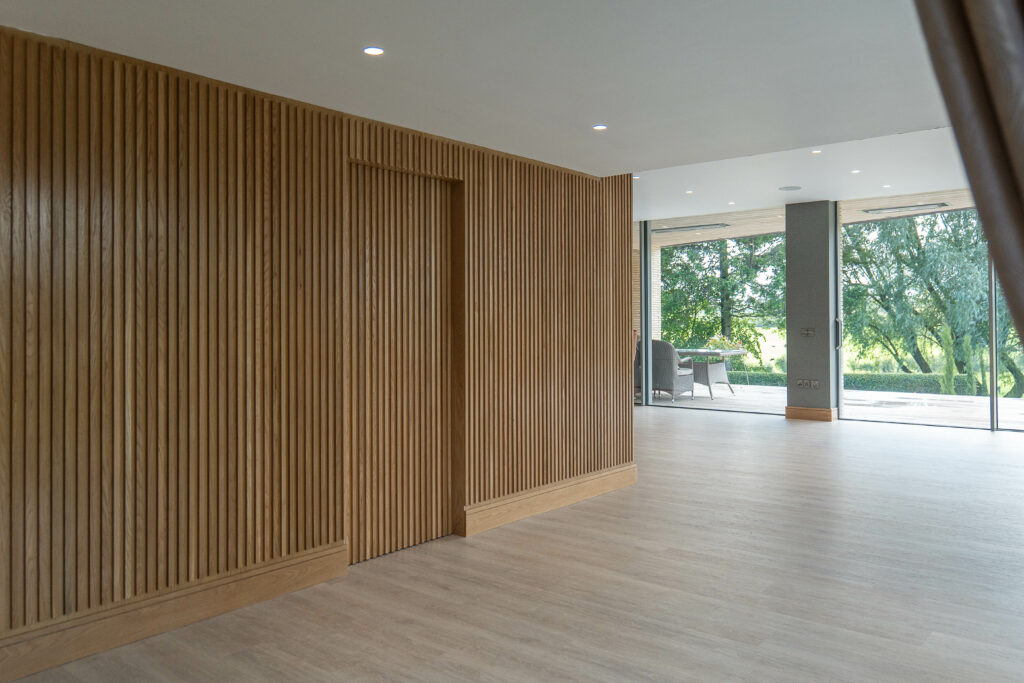
Commercial interiors work hard. Counters, seating, shelving and wall finishes take far more wear than anything in a home, so choices need to balance looks against durability and ease of cleaning. Bespoke joinery is often the best answer: a counter, bar or display unit built to fit the space exactly, in materials chosen to last. Our interior design service can help with space planning, lighting and finishes so the result reflects your brand.

Refurbishment is also a good time to deal with the building itself. If roofs, gutters or windows are tired, it is far cheaper to fix them while the scaffold and trades are already on site. Our winter-proofing checklist for commercial property is a useful place to start.
Frequently asked questions
Can my business stay fully open during a refurbishment?
Often, yes, with phased work and out-of-hours scheduling. Some tasks, such as replacing a shopfront or the main electrical supply, may need a short closure, and we will tell you at the planning stage so you can plan around it.
Do you work outside normal hours?
Where the project needs it, noisy or disruptive tasks can be planned for evenings, early mornings or days you are closed. We agree this with you before the programme is fixed.
Which areas do you cover?
We are based in Ayr and work across Ayrshire, including Prestwick, Alloway, Troon and Monkton. See our builder in Ayr page for more on the work we do locally.
Plan your commercial refurbishment in Ayr
Whether you are refreshing a shop, fitting out an office or reworking a bar or restaurant, the earlier we are involved, the easier it is to keep your doors open while the work goes on. Tell us about your premises and how your business runs, and we will talk you through a programme that fits. Call us on 07790 666673, email info@rhaconstruction.uk or send us a message.