

A home on the Ayrshire coast comes with something money cannot easily buy: the view across the Firth of Clyde to Arran. It also comes with salt air, driving rain and wind straight off the sea. Whether you are building new or renovating an existing house, the design has to make the most of the first while standing up to the rest. As a coastal home builder in Ayrshire, this is the balance we work to on every seaside project.
At RHA Construction we design and build house extensions, custom new builds and full renovations across Ayr, Prestwick, Alloway, Troon and Monkton. Here is what we think about when a client’s plot or house faces the sea.
Why coastal homes in Ayrshire need a different approach
Most of the Ayrshire coastline faces west and south-west, into the prevailing wind. That means rain arrives sideways as often as it falls straight down, and fine salt spray reaches further inland than many people expect. A house that would be perfectly sound in a sheltered street can show problems within a few winters on an exposed seafront plot.
The common issues we see on coastal properties are:
- Water getting into walls through cracked render, poorly detailed window openings or gaps at junctions.
- Corroded metalwork, from wall ties and fixings to gutters, railings and door hardware.
- Tired windows and doors with failed seals, misting units and draughts.
- Wind damage to roofs, ridge tiles, fascias and anything loosely fixed outside.
None of these is a reason not to build or renovate by the sea. They are reasons to specify and detail the work properly from the start.
Designing walls, roofs and finishes for wind-driven rain
In Scotland, the building standards require walls to be designed for the level of exposure to wind-driven rain on the specific site. The Scottish Government’s technical handbook guidance on precipitation (Standard 3.10) explains how exposure is assessed and how wall construction should respond. On an exposed coastal plot, that shapes choices such as cavity width, cavity trays over openings and the type of external finish.
In practice, for coastal homes we pay close attention to:
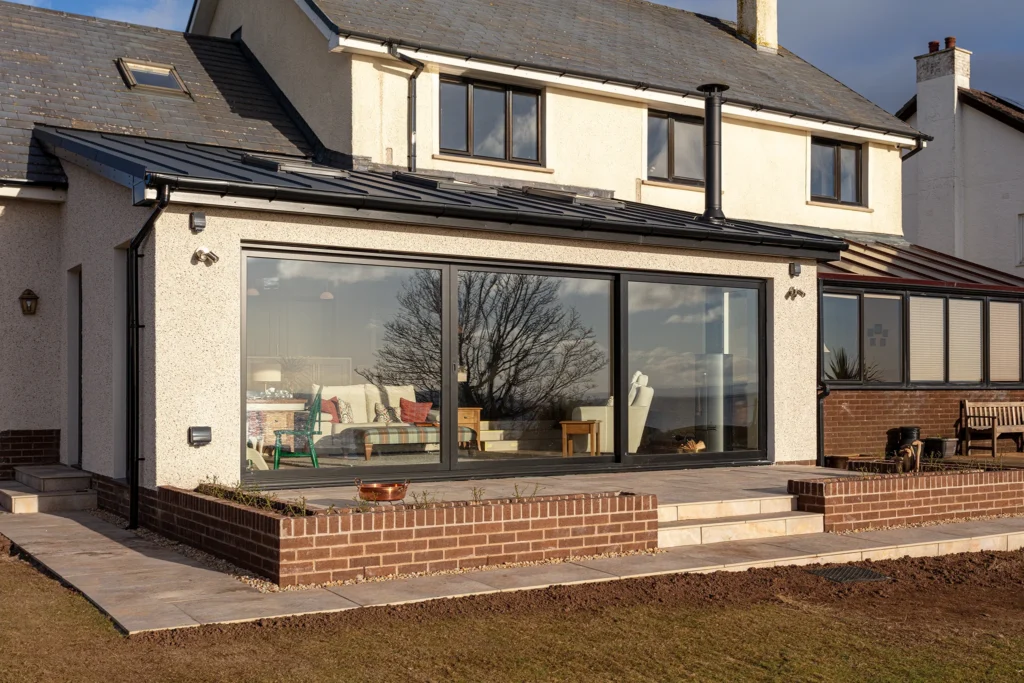
- External finishes. Good-quality render or roughcast, correctly applied with proper beads and movement joints, gives a tough, weatherproof skin. On our Scottish Renovation project we used acrylic roughcast alongside brick and zinc.
- Openings. Most leaks start around windows and doors. Sills, flashings and cavity closers are detailed so water is shed away from the wall, not into it.
- Roofs and rainwater goods. Secure fixing of slates, tiles and ridges, plus gutters and downpipes sized for heavy downpours.
- Metalwork. We specify stainless steel or suitably coated fixings, ties and fittings where salt air would quickly corrode ordinary steel.
Glazing that frames the view and keeps the weather out
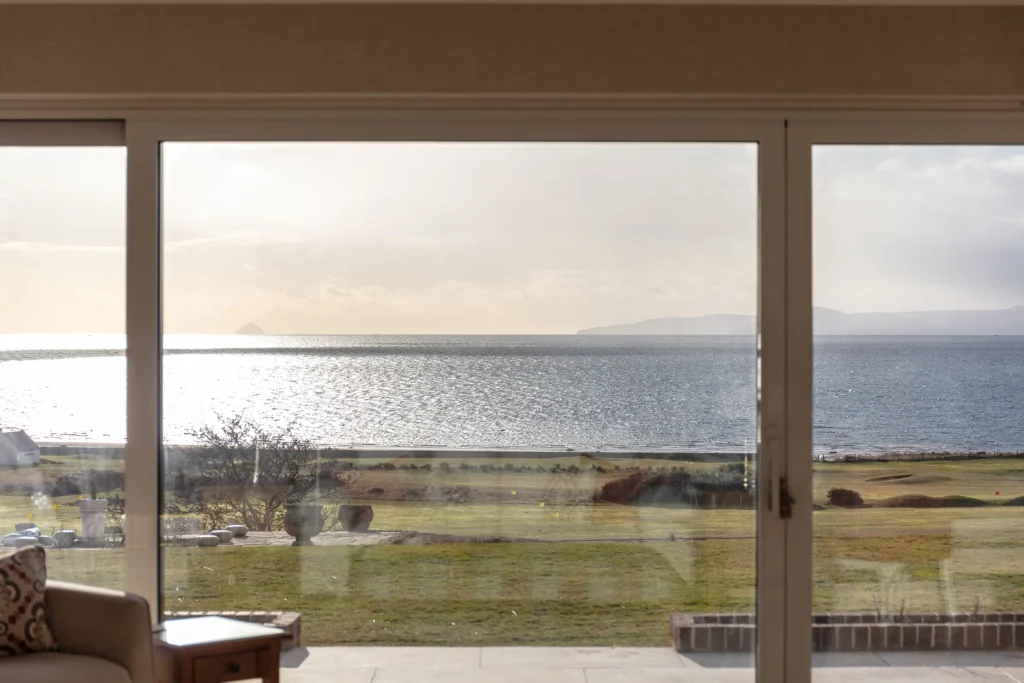
Almost every coastal client wants more glass. On our West Kilbride project in North Ayrshire, we opened up a traditional house into one open-plan kitchen and dining space and added a contemporary extension with floor-to-ceiling windows looking out over the coastline. The view is now part of daily life in the house.
Large glazed walls on an exposed site need more thought than standard windows. Frames, glass and fixings have to cope with wind load, and the units need good seals and drainage to stay watertight in storms. The glazing also has to meet Scottish energy standards, so we balance the size of the openings with the insulation and heating of the rest of the house. Where a seafront elevation catches strong afternoon sun, we consider how the room will feel on a bright summer day as well as a wild January one.
Planning and flood risk on coastal plots
Planning on the coast follows the same process as anywhere else in South or North Ayrshire, but some issues come up more often. Seafront houses are highly visible, so the council will look closely at how a new build or extension sits in views from the shore. Some coastal areas also fall within conservation areas.
Flood risk is the other key check. SEPA publishes flood maps for Scotland that include coastal flooding and future scenarios with climate change. They are a useful first look, although SEPA is clear they are not a property-level assessment. On a low-lying plot we raise flood risk early, because it can affect floor levels, the layout of the site and whether a specialist assessment is needed. As a local builder in Ayr, we know the councils and the coastline well.
Outdoor space and upkeep in sea air
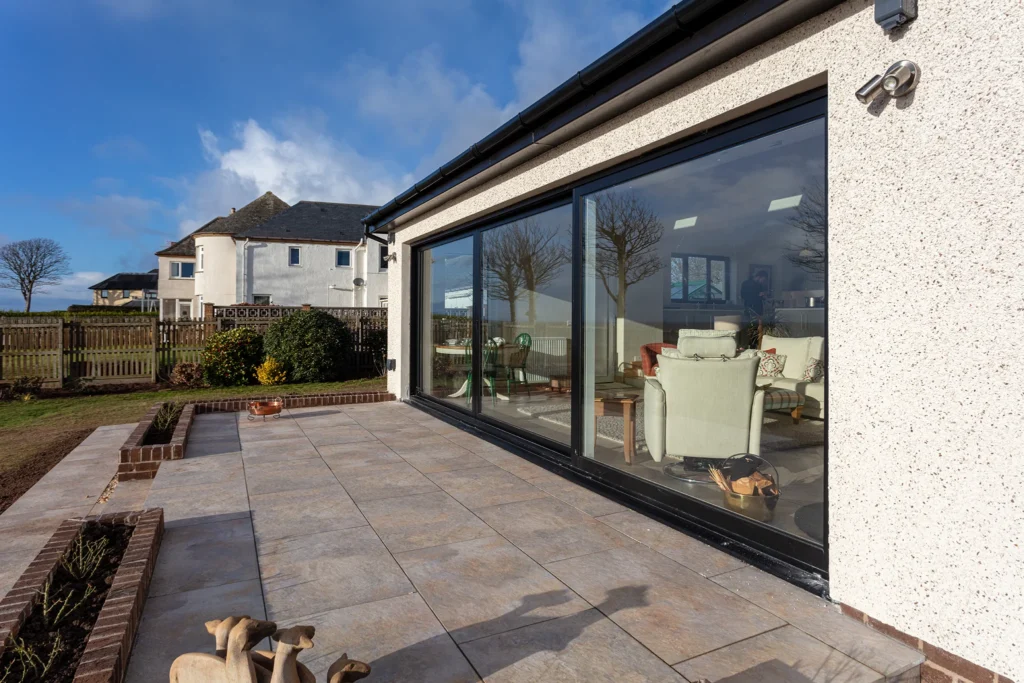
Gardens and driveways by the sea take a battering too. Our hard landscaping team designs patios, terraces, paths and walls with sheltered corners, good drainage and materials that handle salt and frost. A low wall or a well-placed screen can turn a windswept terrace into somewhere you actually sit outside. We covered surface choices in more detail in our post on resin driveways built for coastal weather.
Even a well-built coastal house needs more regular care than an inland one. An annual check of the roof, gutters, render, sealants and external metalwork catches small problems before the weather turns them into big ones. Our property maintenance service can carry out inspections and repairs, and if a storm has already caused damage, our guide to storm damage repairs in Ayrshire explains what to do first.
Coastal homes in Ayrshire: frequently asked questions
Can I have large windows on an exposed seafront house?
Yes. It comes down to the right frames, glass, fixings and detailing for the site’s exposure, and balancing the glazing with the energy performance of the whole house. We design these together from the start.
Is it worth renovating an older coastal house rather than rebuilding?
Often, yes. Many older seaside homes are solidly built and can be transformed by opening up the layout, upgrading insulation and windows, and adding an extension towards the view, as we did at West Kilbride. After a site visit we can give you an honest view on renovating or rebuilding. Our construction team handles either route.
Do you build on coastal plots outside Ayr?
We are based in Ayr and work across Ayrshire, including Prestwick, Alloway, Troon and Monkton. Get in touch with details of your plot or property and we will let you know how we can help.
Talk to a coastal home builder in Ayrshire
Whether you are planning a new home with a sea view or want to renovate and extend the one you have, we would be glad to visit and talk it through. Every project has one dedicated project manager from the first drawing to handover, and our in-house design team makes sure the house works for the coast as well as for you. Call 07790 666673, email info@rhaconstruction.uk or use the button below.