

Troon and Prestwick are two of the most popular places to live in Ayrshire, and it is easy to see why: sea air, sandy beaches, good schools and quick links to Ayr and Glasgow. Many families who love where they live would rather extend than move. A home extension in Troon or Prestwick can give you the open-plan kitchen, extra bedroom or garden room you need, but building a few streets from the Firth of Clyde brings some local questions that are worth thinking about early.
At RHA Construction we design and build house extensions across Troon, Prestwick, Ayr, Alloway and Monkton. Here is what we look at when a client in either town asks us about extending.
Know your house type before you design
Both towns have a real mix of homes, from sandstone villas and traditional terraces near the centre to interwar semis and post-war bungalows further out. Each one extends differently.
- Sandstone and traditional homes need an extension that respects the original building. That might mean matching stone or a deliberately contemporary design that sits quietly beside it, and careful detailing where new walls meet old ones.
- Bungalows often have generous gardens, which makes a single storey rear or side extension straightforward. Some also have the roof height for rooms upstairs.
- Semi-detached and terraced homes have shared boundaries, so neighbours, light and access for building work all shape what is possible.
Getting this right at the start saves time later, because the house type affects planning, structure and cost. If you are still weighing up which way to build, our guide to single versus two storey extensions compares the options.
Conservation areas and planning in Troon and Prestwick
Both Troon and Prestwick have conservation areas, and they are among the 23 that South Ayrshire Council lists on its historic environment page. That matters, because permitted development rights (work you can do without a planning application) are much more limited inside a conservation area, and the council has Article 4 Directions covering most of its conservation areas, which remove further rights.
Outside a conservation area, many single storey rear extensions can go ahead as permitted development under Scotland’s Class 1A rules, provided they stay within the size and boundary limits. The Scottish Government’s householder permitted development guidance sets out the conditions. Two storey extensions usually need planning permission either way.
Whatever the planning position, almost every extension needs a building warrant before work starts. Our plain-English guide to building warrants in South Ayrshire explains how that process works and what the council’s building standards team will look for.
Building a home extension in Troon for coastal weather
Homes near the seafront take more wind, more driving rain and more salt in the air than houses inland. Scottish building standards already require external walls to suit the wind-driven rain exposure of the site, but on the coast we go further with the details that keep an extension looking good for decades.
- Fixings and metalwork: stainless steel fixings, lintels and render beads resist salt corrosion far better than standard steel.
- Window and door frames: powder-coated aluminium or high-quality uPVC with good seals, chosen for exposed sites.
- Render and cladding: systems rated for exposed locations, with proper drips, cappings and flashings so water is thrown clear of the walls.
- Roofs: careful detailing at verges and ridges, where wind lifts tiles and membranes first.
- Ground conditions: some coastal plots sit on sandy ground, so a structural engineer designs the foundations once the soil has been checked.
Our article on building and renovating coastal homes in Ayrshire goes into these materials in more detail.
Making the most of light and sea views
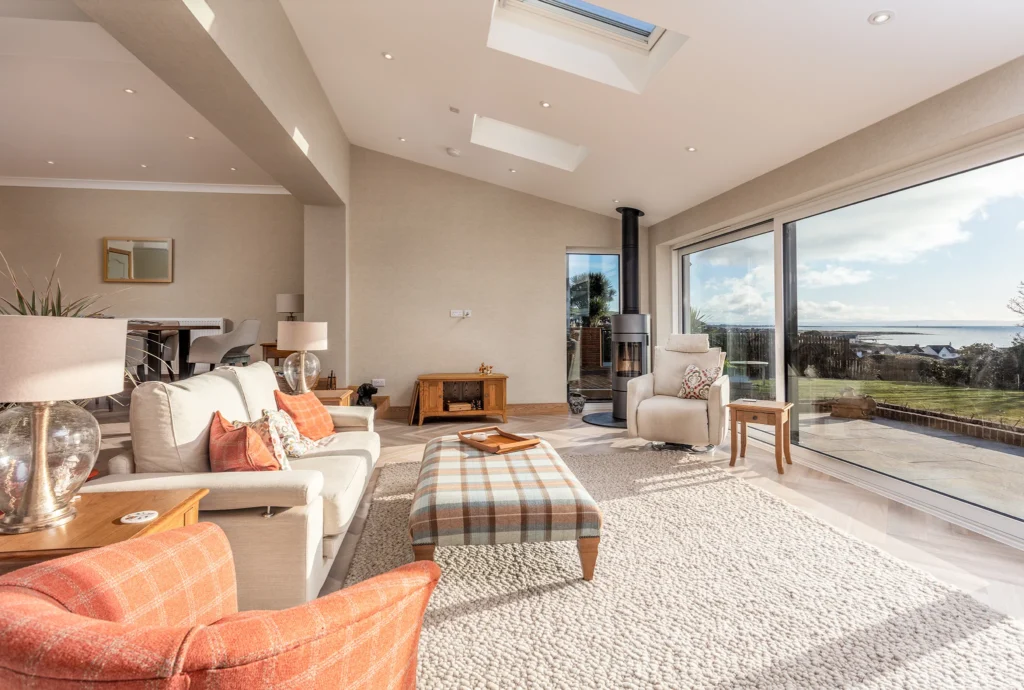
If your home looks towards Arran or the Firth of Clyde, the extension is your chance to bring that view inside. Large sliding or bi-fold doors, picture windows and rooflights can transform a dark rear kitchen into the room everyone wants to be in.
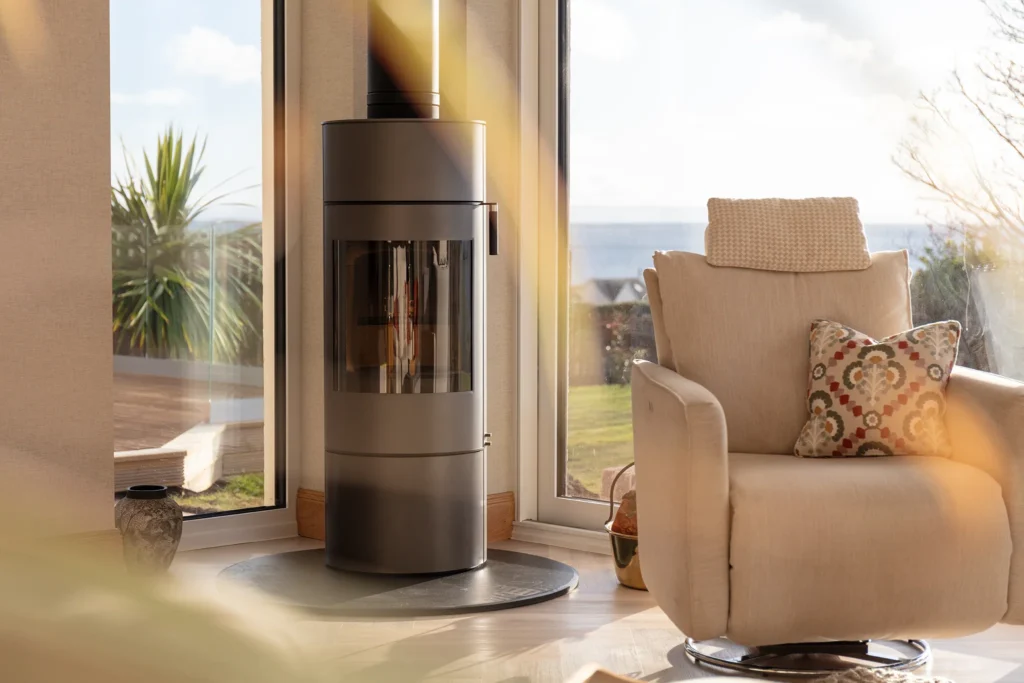
Big glazing needs balancing, though. Scottish energy standards set limits on heat loss, so the amount and quality of glass is designed together with insulation and heating. West-facing glass can overheat on summer evenings, and exposed glazing needs frames and seals that stand up to winter storms. At our West Kilbride project, floor-to-ceiling glazing frames the coastal view while the rest of the extension keeps the space warm and sheltered.
Working with one local design-and-build team
Extending a home means architects, engineers, planning, warrants, trades and finishes all coming together. As a local builder serving Ayr, Troon and Prestwick, we handle the whole project for you, with a dedicated project manager as your single point of contact from the first visit to handover. Our interior design service can also help the new space flow naturally into the rest of your home.
Winter is a good time to start. Design, drawings and approvals take time, so planning now puts you in a strong position to build when the weather improves. Our guide to planning a house extension this winter walks through the first steps.
Frequently asked questions
How do I know if my house is in a conservation area?
South Ayrshire Council can confirm this, and it will send a copy of a conservation area appraisal on request. We check the status of every property at our first visit, before any design work begins.
Do I need planning permission for a single storey extension in Prestwick?
Not always. If your home is outside a conservation area and the extension meets the Class 1A limits, it may be permitted development. You will still need a building warrant for almost all extensions.
Does building near the sea cost more?
It can, a little, because of higher-specification fixings, frames and finishes. Those choices pay for themselves in lower maintenance over the life of the extension. We price every project individually after a site visit.
Talk to us about your Troon or Prestwick extension
Whether you want a bright kitchen extension facing the sea, an extra bedroom for a growing family or a sympathetic addition to a sandstone villa, we can help you plan it properly. We will visit your home, talk through what you want, check the planning position and give you honest advice on design and budget.
Call 07790 666673, email info@rhaconstruction.uk or use the button below to arrange a site visit and a no-obligation quote.