

Thick stone walls, deep window reveals, panelled doors and original fireplaces are why so many people fall for an older Ayrshire home. They can also be why it feels cold and draughty by November. The good news is that a well-planned stone house renovation in Ayrshire can make a traditional home far warmer and cheaper to heat without stripping out the features that give it its character. The key is to insulate in a way that works with the building rather than against it.
At RHA Construction we design and build renovations, extensions and new homes across Ayr, Alloway, Prestwick, Troon and the wider county. Here is how we approach insulating traditional stone houses, and what to think about before you start.
Why traditional stone walls need a different approach
Most modern houses are built with cavity walls and materials designed to keep water out completely. A traditional stone house works differently. Its solid walls, usually built with lime mortar and finished with lime plaster inside, take up a little moisture in wet weather and release it again when conditions dry out. That is often described as the wall being “breathable” or vapour-open.
Problems start when that balance is upset. Cement render or pointing, gypsum plaster, plastic paints and some modern insulation boards can trap moisture inside the wall. Over time that can lead to damp patches, mould behind linings, decaying timber and, in the worst cases, damage to the stone itself. Historic Environment Scotland’s guidance on saving energy in traditional buildings stresses the same point: choose materials and methods that are compatible with the existing fabric.
With Ayrshire’s wet, windy coastal weather, getting this right matters even more. An insulation job that looks fine on day one but traps moisture can cause expensive problems a few winters later.
Step one: fix the damp before you insulate
Insulation should never be used to cover up a damp wall. Before we talk about linings, we look at where water is getting in and why it is not drying out. Common culprits on older Ayrshire homes include:
- Blocked or leaking gutters and downpipes soaking the same patch of wall every time it rains.
- Hard cement pointing or render that holds water in the stone instead of letting it dry out.
- Raised ground levels, such as paths, patios or flower beds built up against the wall.
- Blocked underfloor vents starving a suspended timber floor of airflow.
- Roof and chimney defects, including slipped slates and failed flashings.
Sorting these out first means the walls can dry and the new insulation stays dry too. It is usually some of the best value work in the whole project.
Insulating stone walls while keeping their character
Internal wall insulation is the usual route for a traditional stone house, as insulating the outside would hide the stonework and change how the house looks. The right build-up depends on the wall, how exposed it is, and whether there are original finishes worth keeping. Options include:
- Vapour-open insulation boards, such as wood fibre, finished with lime plaster, so the wall can still manage moisture.
- Insulating plasters, which add warmth with a much thinner build-up and help keep window reveals and room sizes close to the original.
- Insulating behind existing lath and plaster where it is in good condition, so original cornicing and plasterwork can stay in place.
We also look carefully at the details that are easy to get wrong: window reveals, the junctions with floors and ceilings, and anywhere pipes or cables pass through the wall. These are the spots where cold bridges and condensation tend to appear if they are not thought through.
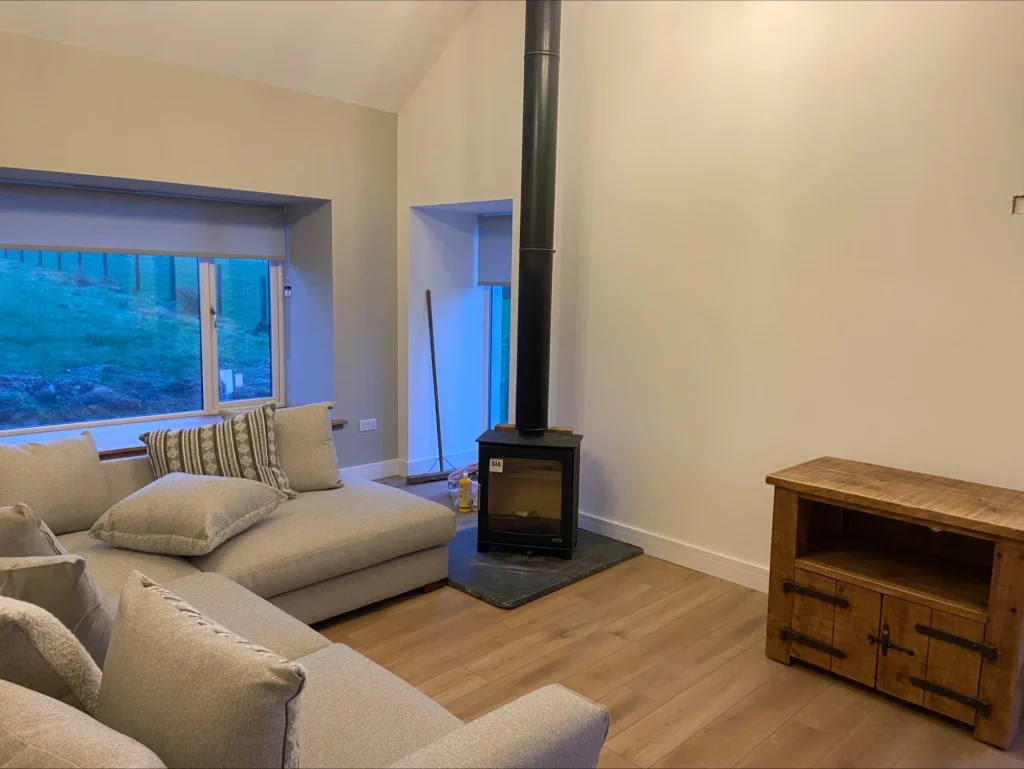
At Laigh Balsarroch Farm we insulated all of the existing outside walls internally as part of turning a run-down farmhouse into a warm, five-bedroom family home, alongside new windows that make the most of the views.
Roofs, floors and windows: the other big wins
Walls get the attention, but they are only part of the picture. In many stone houses the quickest improvements come from elsewhere:
- Roof spaces and coombed ceilings: topping up loft insulation is often simple, but roof timbers still need ventilation. Sloping coombed ceilings in upstairs rooms need more care to avoid condensation.
- Suspended timber floors: insulating between the joists and sealing gaps at the skirting can cut draughts dramatically, as long as the vents below stay clear.
- Windows: original sash and case windows can often be repaired and draught-proofed, and secondary glazing adds warmth while keeping the original frames. Replacing windows on a listed building or in a conservation area may need consent, so check with South Ayrshire Council first.
- Draughts: unused chimneys, gaps around doors and old service openings all leak heat. Sealing them, while keeping enough ventilation for a healthy home, makes a noticeable difference.
Once the fabric is improved, the heating can be planned around it. On our period home renovation in Alloway we stripped the house back to its bare walls, fully rewired and replumbed it, and installed underfloor heating throughout the ground floor. Pairing better insulation with modern heating and smart heating controls gives steady, comfortable warmth without the old hot-and-cold cycle.
Keeping the features that make your stone house special
A warmer home should still feel like the house you bought. Before work starts, we agree which features are staying: fireplaces, cornicing, shutters, panelled doors, skirtings and staircases. Where insulation changes the depth of a wall, our joinery team can rebuild window linings, shutters and fitted furniture so they look as if they have always been there.
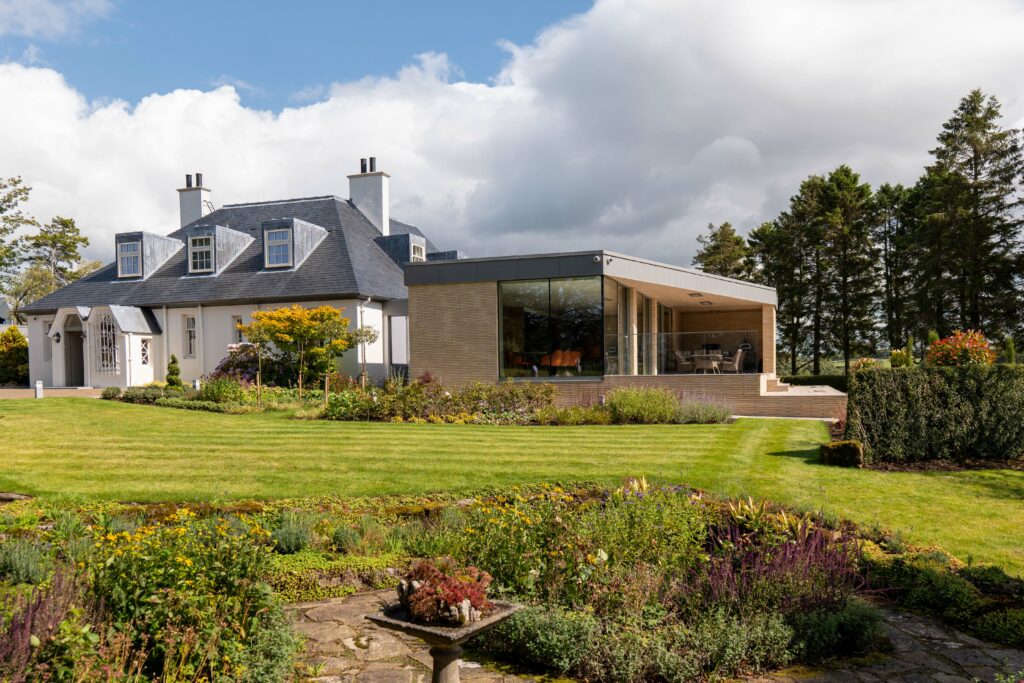
It is also possible to renovate in stages, or while you live in the house. On our Scottish Renovation project the main house was renovated while the clients carried on living there, before we built two extensions. If you are weighing up how far to go, our guide on whether to renovate or rebuild is a useful starting point.
Stone house renovation in Ayrshire: frequently asked questions
Will insulating my stone walls make the rooms smaller?
A little, depending on the build-up. Insulating plasters and slim boards keep the loss small, and we plan reveals, skirtings and joinery so the rooms still look right.
Do I need a building warrant to insulate an old house?
It depends on what else is involved. Structural alterations, extensions and some other works do need one. Our plain-English guide to building warrants in South Ayrshire explains the basics, and we will confirm what applies to your project.
Is there funding for insulating a traditional home?
Homeowners in Scotland may be eligible for support through the Home Energy Scotland Grant and Loan scheme. Eligibility and amounts change, so check with Home Energy Scotland before you commit to the work.
Talk to us about your stone house renovation
Whether you own a sandstone villa in Ayr, a cottage near Alloway or a farmhouse out in the country, we can help you make it warmer and more comfortable without losing what makes it special. As a design-and-build construction company and a trusted builder in Ayr, we handle everything from the first survey to the final finishes, with one dedicated project manager keeping the job on track.
Call 07790 666673, email info@rhaconstruction.uk or use the button below to arrange a site visit and a no-obligation quote.