

You have a plot, or you are close to buying one, and you know you want a new home built to your own design. The next big decision is how to get it built. Do you take it on as a self-builder and manage the designers and trades yourself, or do you hand the whole job to a new build home builder in Ayrshire on a design-and-build basis? Both routes can produce a beautiful house. They differ in who carries the risk, how much of your time it takes and how predictable the result is.
At RHA Construction we design and build homes, extensions and major renovations across Ayr, Prestwick, Alloway, Troon and the wider county. This guide sets out the main routes to a new build in Scotland, the rules that apply whichever you choose, and the questions to ask before you commit.
The three main routes to a new build home
Most one-off homes in Scotland are delivered in one of three ways:
- Self-managed self-build. You appoint an architect or designer, get the consents, then hire and coordinate the individual trades (groundworks, frame, roofing, joinery, plumbing, electrics and so on) yourself.
- Architect-led, then tender to a builder. An architect designs the house and takes it through planning and the building warrant. The design is then priced by contractors, and you sign a separate contract with the builder you choose.
- Design-and-build. One company takes responsibility for both the design and the construction, from first sketches to handover, under a single contract.
Self-build: maximum control, maximum involvement
Managing your own build appeals to people who have the time, some construction knowledge and a taste for hands-on project management. You choose every supplier and can keep a close eye on what each element costs.
The trade-off is that you become the project manager. You sequence the trades, order materials so they arrive at the right time, deal with problems on site and keep the council informed at the inspection stages set out with your building warrant. If one trade is late, the knock-on delays and costs are yours to sort out, and when something goes wrong between two trades it can be hard to say whose job it is to fix it.
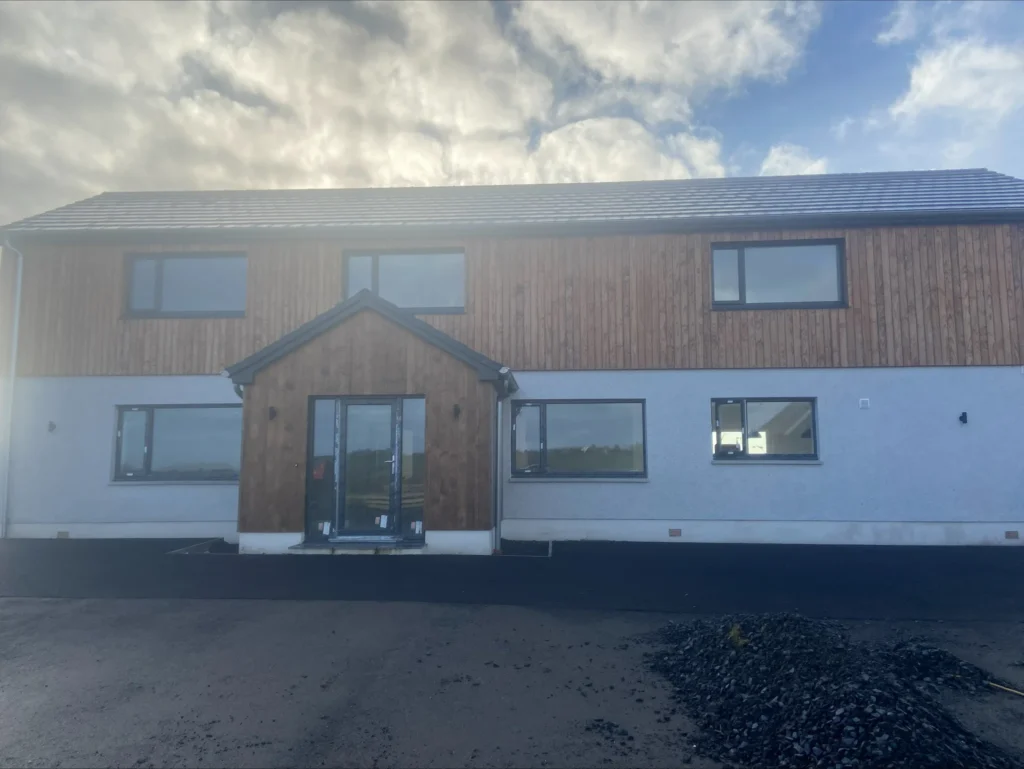
Design-and-build with a new build home builder in Ayrshire
With design-and-build, the people drawing your house are part of the same team that will build it. That has some practical advantages:
- One point of responsibility. If there is a problem, there is one company to resolve it, not a chain of separate designers and trades.
- Buildable designs. Builders look at the drawings as they develop, so the details work on site and costs are considered while the design can still change easily.
- Consents handled for you. The design team prepares the planning application and the technical package for the building warrant, and deals with the council’s questions.
- Less of your time. You make the decisions that matter, such as layout, finishes and budget, without running the site day to day.
That is how our custom and bespoke new build service works. Our architects and designers work with you on the design, and every client is given a dedicated project manager who oversees the project from start to finish, as described on our company page. You can be as involved as you like, from regular site meetings to a simple weekly update.
If you are still choosing between a custom design (adapting an existing plan) and a fully bespoke one, our earlier post on the benefits of a custom new build home in Ayrshire explains the difference.
Scottish rules that apply whichever route you choose
The route you pick changes who does the work, not what the law requires. Every new home in Scotland needs:
- Planning permission from the local council, which in this area is usually South Ayrshire, East Ayrshire or North Ayrshire depending on where your plot sits.
- A building warrant before work starts, showing the house will meet the Scottish building standards. The Scottish Government’s building warrant guidance explains the process.
- An accepted completion certificate before anyone moves in. Occupying a new building before the council has accepted it is an offence.
New homes also have to meet the New Build Heat Standard. For new buildings whose building warrant was applied for from 1 April 2024, the main heating system must be a clean heating system such as a heat pump, rather than a gas or oil boiler. It affects the design from day one, from insulation levels to where the plant goes, which is one reason we plan heating and controls alongside the layout through our smart automation service.
VAT is worth checking early too. Building a new home is generally zero-rated for VAT when the work is carried out by a VAT-registered builder, and self-builders who buy materials themselves can usually reclaim VAT through HMRC’s DIY housebuilders scheme. The rules and time limits are strict, so take advice from your accountant before you start.
How to choose the right route for you
Be honest about these questions before you decide:
- How much time can you give it? Self-managing a build is close to a part-time job for months, often longer.
- How comfortable are you with risk? If a fixed scope and one accountable contractor matter more to you than squeezing every line of the budget, design-and-build is usually the better fit.
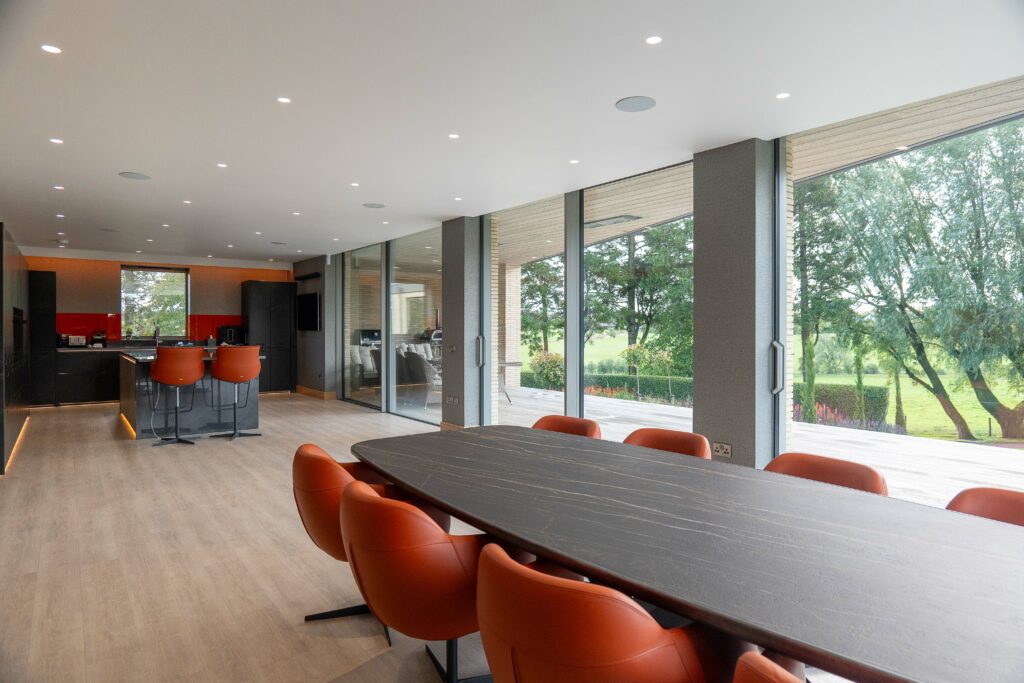
- How complex is the house? Steelwork, large areas of glazing, sloping or rural sites and new services all reward a coordinated team.
- What does the builder’s track record show? Look at completed projects, ask how changes are priced and agreed, and ask who your day-to-day contact will be.
Our projects show the kind of work a single team can coordinate. At our Scottish Renovation project we added two extensions, new steelwork, a re-roof and a treble garage while the clients lived in the house. At Laigh Balsarroch Farm we turned a farmhouse that had stood empty into a five-bedroom home with four bathrooms and timber cladding. If you have an existing house on your plot, our guide on whether to renovate or rebuild will help you weigh up the options.
Self-build and design-and-build: frequently asked questions
Is self-build always cheaper?
Not necessarily. You avoid a main contractor’s management costs, but you take on the cost of delays, mistakes and your own time. A clear fixed scope with one contractor can be easier to budget for.
Can I bring my own architect’s drawings to a design-and-build company?
Often, yes. We can review existing drawings, price them and develop the technical detail needed for the building warrant. Get in touch and we will talk through what you have.
How long does a new build take?
It depends on the design, the site and the time taken for consents, but a custom home typically takes from several months to over a year. We give you a detailed timeline for your own project once we understand the plot and the brief.
Talk to us about your new build
If you want a new home without becoming a full-time project manager, we can take it from first sketches to handover, with one dedicated project manager throughout. As a design-and-build construction company based in Ayr, we know the local councils, the coastal weather and the materials that suit Ayrshire. Call 07790 666673, email info@rhaconstruction.uk or use the button below to arrange a consultation and a no-obligation quote.