

A period property renovation in Alloway is one of the most rewarding projects a homeowner can take on. Sandstone villas, Victorian and Edwardian family houses and older cottages have proportions and detail that new homes rarely match. They also tend to come with cold rooms, tired wiring, awkward layouts and bathrooms that have been patched up for decades. The aim of a good renovation is simple: modern comfort, with the original character kept intact.
At RHA Construction we renovate traditional homes across Alloway, Ayr and the rest of Ayrshire. This guide covers what to plan for, the consents you may need, and how we approach this kind of work, using a five-bedroom Alloway home we recently completed as an example.
Why period property renovation in Alloway needs a different approach
Older houses were built differently. Most have solid stone or brick walls rather than cavity walls, lime-based mortars and plasters, timber floors and lath-and-plaster ceilings. These materials are designed to let moisture move through the building and dry out. Covering them with the wrong modern products, such as cement render or non-breathable insulation, can trap damp and cause problems that only show up years later.
That does not mean a traditional home has to stay cold. It means the upgrades need to be chosen to suit the building. Historic Environment Scotland’s advice on saving energy in traditional buildings is a good starting point, and it is the same thinking we apply on site: compatible materials, careful detailing and good ventilation.
Planning consents for traditional and listed homes
Before any design is fixed, it is worth checking what protections apply to your property. Alloway is one of South Ayrshire’s conservation areas, and some older homes in and around Ayr are listed. Each brings its own rules:
- Listed buildings. Altering or extending a listed building, inside or out, needs listed building consent from the council. Like-for-like repairs usually do not, but it is always worth checking first. Historic Environment Scotland explains how listed building and conservation area consent works.
- Conservation areas. Some permitted development rights are restricted, so changes to windows, roofs, boundaries and extensions can need planning permission even where they would not elsewhere.
- Building warrants. Structural alterations, new bathrooms with altered drainage and many other works need a building warrant whether or not the house is listed.
We check the status of the property at the start, then prepare and manage the drawings and applications as part of the design stage, so you are not left chasing paperwork.
Case study: a back-to-brick period home renovation in Alloway
Our period home renovation in Alloway shows what a full refurbishment can achieve. The five-bedroom house was stripped back to its bare walls so that everything behind the surfaces could be renewed properly:
- a full rewire and a complete replumb;
- underfloor heating throughout the ground floor, giving even warmth without radiators taking up wall space;
- removal of a large central chimney stack, with the structure re-engineered to free up space on two floors;
- a new bathroom formed on the mid floor, in space the chimney used to occupy;
- an open-plan kitchen and living area on the ground floor, with bespoke cabinetry;
- all five bathrooms refitted with high-end fixtures and finishes;
- a new bar reception area built around a fully bespoke bar.
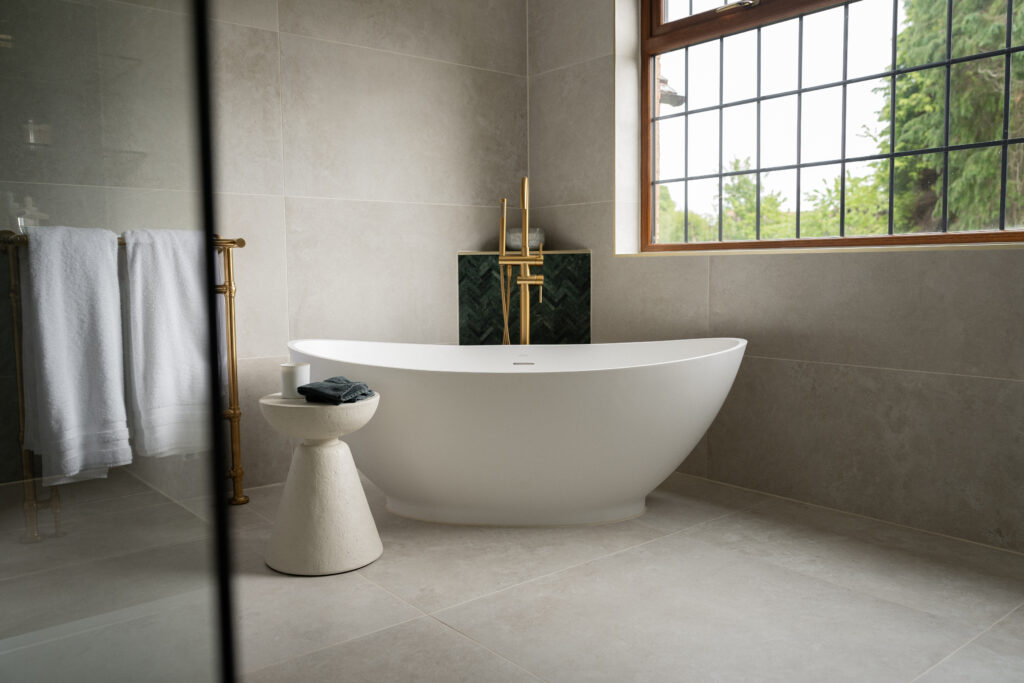
The result is a house that keeps its period windows and proportions but works like a modern family home. If you are weighing up whether a project like this is worth it, our guide on whether to renovate or rebuild sets out the main trade-offs.
Keeping original character while adding modern comfort
The best period renovations look as if the house has always been that way. That comes down to a few principles:
| Keep or restore | Upgrade sensitively |
|---|---|
| Cornicing, ceiling roses, skirtings and architraves | Wiring, plumbing and heating hidden behind them |
| Original window openings and proportions | Draughtproofing, secondary glazing or replacement windows where consent allows |
| Fireplaces worth keeping as features | Underfloor or zoned heating, smart controls |
| Timber panelling and doors | Insulation in floors and lofts using compatible materials |
Joinery makes a big difference here. New cabinetry, shelving, window seats and panelling made to fit the room sit far more naturally in an older house than off-the-shelf units. Our bespoke joinery team builds pieces to match the period of the home, and our interior design service pulls together lighting, finishes and furniture so the old and new feel like one scheme.
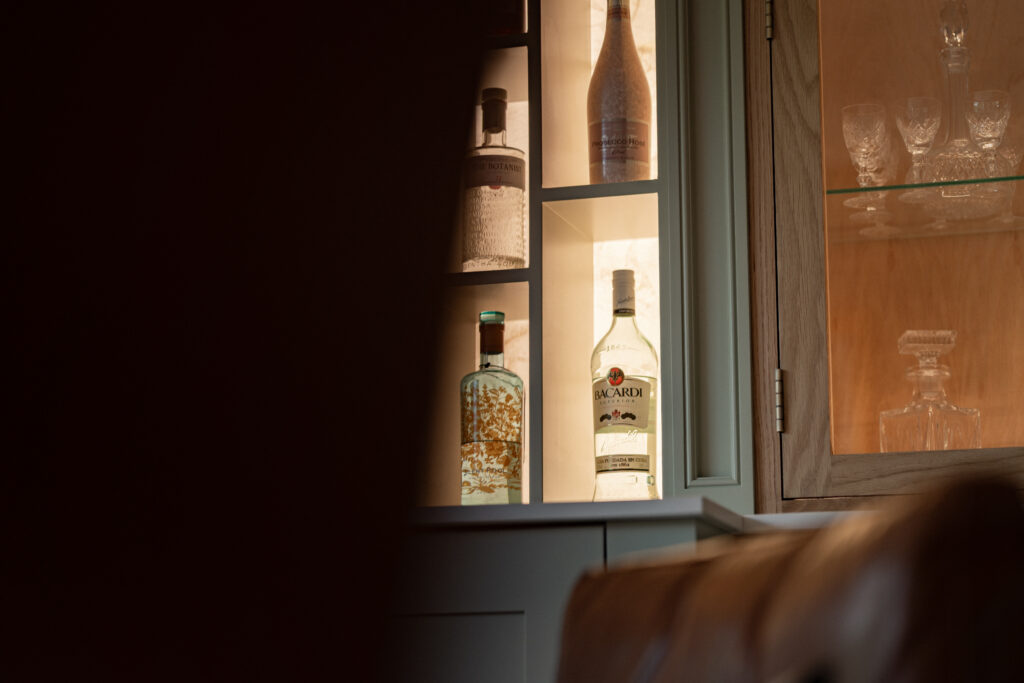
Our Nolten project is another good example: the bar and entertainment room was stripped back to the original lath and plaster, then fully timber panelled before the bar was built. On our Scottish renovation project, the clients stayed in the house throughout while every bedroom gained an en-suite and steelwork opened up the main living area.
Period property renovation in Alloway: frequently asked questions
Can I live in my period home during the renovation?
Sometimes. On lighter or phased projects, we plan the work so part of the house stays usable. A full back-to-brick refurbishment, with rewiring and replumbing throughout, usually means moving out for at least part of the programme. We will tell you honestly which applies at the survey stage.
Can a chimney stack or load-bearing wall be removed in an older house?
Often, yes, as the Alloway project shows. It needs a structural engineer’s design, a building warrant and, for listed buildings, listed building consent. Done properly, it can free up space for a new bathroom or an open-plan kitchen.
Will modern heating suit a traditional stone house?
Yes, if it is designed for the building. Underfloor heating on the ground floor works well in many period homes, and it pairs best with sensible insulation and draughtproofing so the heat stays in.
Talk to us about your period home
Whether you have just bought a traditional house in Alloway or have lived in one for years and want it to work better, we can help. As a local builder in Ayr with experience of renovating traditional properties, we will visit, look at the building with you and give you a clear, no-obligation quote. Call 07790 666673, email info@rhaconstruction.uk or use the button below to arrange a consultation.